Artificial Intelligence is now a structural lever for rethinking processes, services and decision-making models. Machine Learning and generative AI expand analytics, automation, and decision support capabilities, bringing the hidden value in large volumes of data to the surface and enabling new forms of human-machine interaction.
Our approach to AI Governance
Bringing AI into production requires more than just choosing the right model. It requires a framework that governs the entire system lifecycle: from data design to decision transparency, from risk management to regulatory compliance.
Even in the most autonomous architectures, we maintain control mechanisms that preserve people’s decision-making role. AI acts within defined perimeters; man always retains the ability to intervene and correct.
We make algorithms’ decisions explainable through XAI methodologies and reporting tools that clarify the reasoning of the model, ensuring accountability and trust from users and stakeholders.
We adopt protocols to detect and mitigate bias in training data, ensuring that models produce decisions that are fair, inclusive and compliant with the organization’s ethical principles.
We manage risk mapping, systems classification, and technical documentation required by the AI Act, GDPR, and ISO 42001. For regulated contexts that require data sovereignty – PA, Healthcare, Defense – we design Sovereign AI architectures on certified national clouds or on-premise, as a contextual architectural choice and not as a default constraint.
Our development process is itself AI-assisted
The way we build our systems reflects what we design for our customers. AI isn’t just the product we deliver: it’s an integral part of our development process, from initial analysis to implementation.
Our solutions that implement Artificial Intelligence
Agentic AI
Agentic AI
We design systems where one or more autonomous AI agents work together to perform complex tasks, orchestrate decision-making workflows, and proactively interact with business systems. From intelligent automation pipelines to multi-agent systems, our architectures are designed to operate in production with reliability, control, and scalability.
AI Assistants & Co-pilots
AI Assistants & Co-pilots
We create chatbots, virtual assistants and process co-pilots that support operators and decision makers in daily activities, on text and voice channels. The solutions integrate securely with existing ERP, CRM, and applications, improving access to information, productivity, and quality of decisions. Without replacing human judgment, but enhancing it.
RAG & Knowledge AI
RAG & Knowledge AI
We design RAG (Retrieval-Augmented Generation) systems that combine business knowledge bases with large language models, enabling semantic search, Q&A on internal documentation and specialized domain assistants. The right information, at the right time, in the right context.
ML & Predictive Analytics
ML & Predictive Analytics
We develop custom Machine Learning models for classification, regression, forecasting and anomaly detection, with complete pipelines from the training phase to the monitoring of drift in production. Our models come into operation reliably and measurably, adapting to customer-specific data and processes.
Computer Vision
Computer Vision
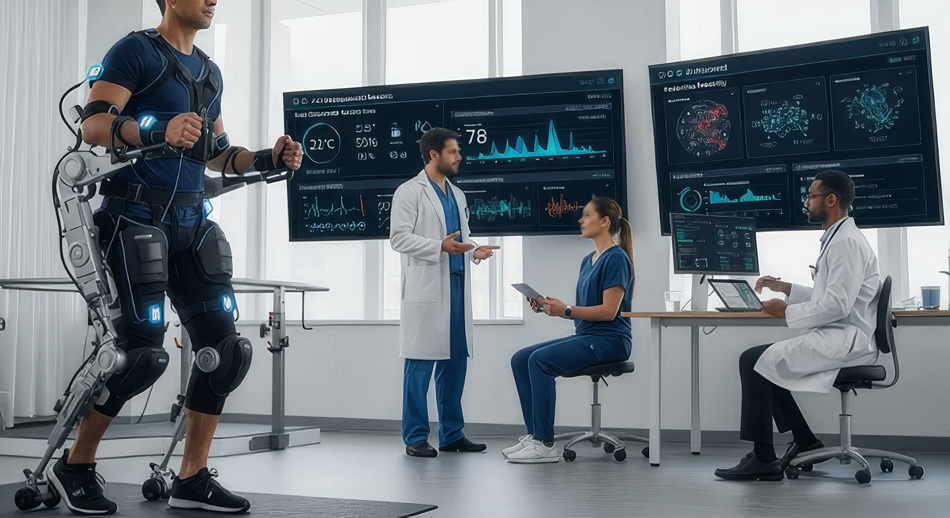
We design Computer Vision models for image and video analysis, visual pattern recognition and advanced OCR on complex documents. The solutions are used in manufacturing, healthcare and infrastructure, where the ability to interpret visual signals generates direct operational value.
Integrated AI solutions
Integrated AI solutions
We design and build applications that bring AI capabilities directly into the hands of end users: analytical dashboards, conversational interfaces and operational portals, integrated with the customer’s information systems through APIs and dedicated backend layers. We don’t deliver templates: we deliver ready-to-use products.
AI Guardrail
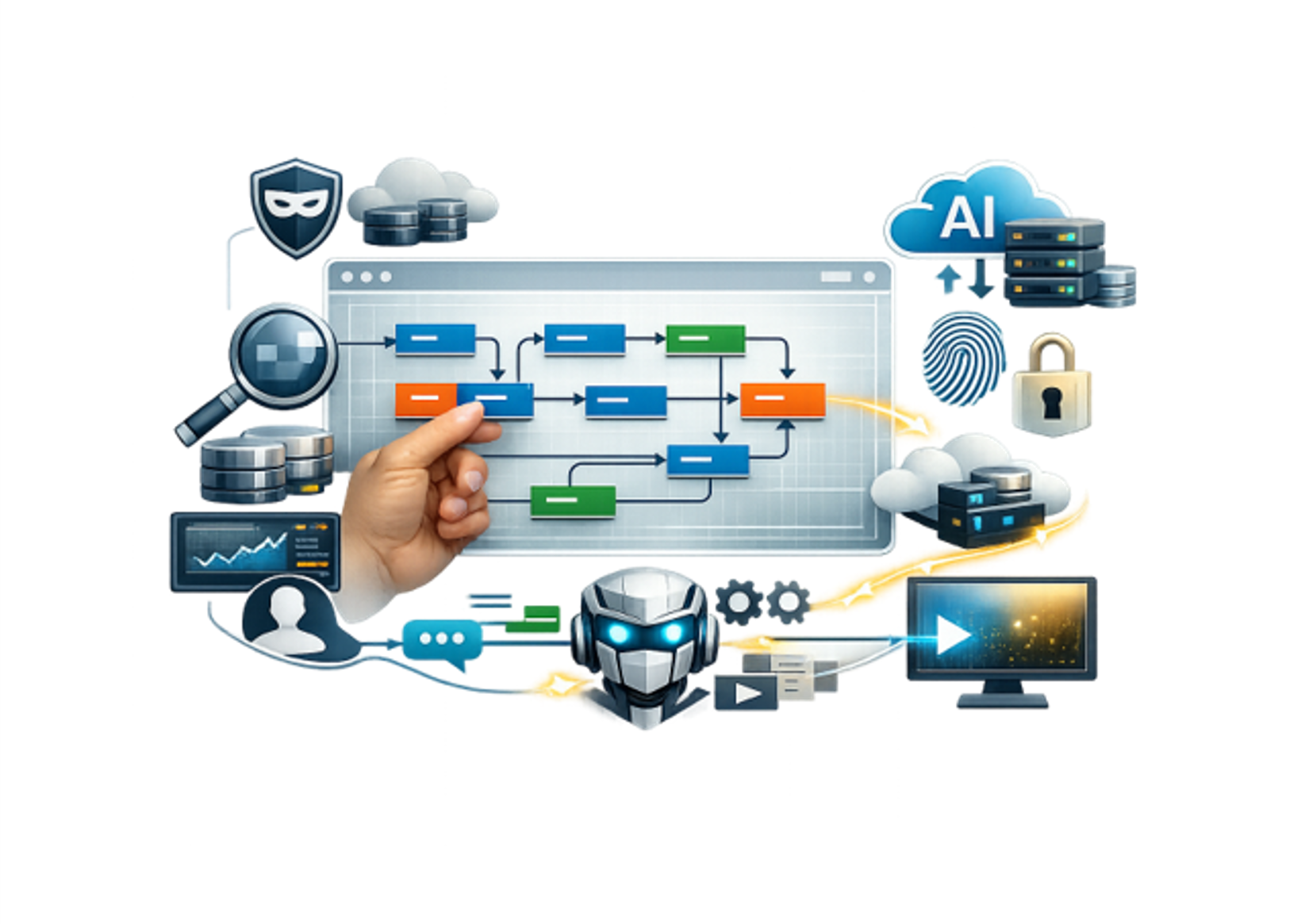
Bring AI to production with a platform designed to orchestrate agents, models, and tools in a secure and controlled way. AI Guardrail enables visual flows, comprehensive observability, protection of sensitive data, and freedom to choose between different LLM models, supporting scalable and governed enterprise adoption.